Services We Provide
Legal Compliance
CTE (NOC) –
- It involves making an application in a prescribed format to respective State Pollution Control Board along with required documents and scrutiny fees.
- It is followed by physical inspection of the site and assessment of the environmental management system proposed so as to meet with the mandatory requirement prescribed by State pollution Control Board.
CC&A(CTO) –
- Before starting / operating the activity. After getting NOC from the Board, the unit can start work related to start up the activity.
- And before operating the activity, the permission in the form of Consolidated Consent & Authorization [CCA] [Consent to Operate] has to be obtained, under Water Act-1974, Air Act-1981 and Environment Protection Act, 1986 and its amendment.
EC (Environmental Clearance) –
- Pre- feasibility Report and Form I to MOEF/SEIAA
- Presentation of TOR to EAC
- Award of TOR
- Setting up of Environmental Station to collect the data
- Environment and Social Baseline Study
- Project Description and EIA Terms of Reference
- EIA Studies and Impact Analysis:
- a) REIAA - A tool to identify, define and prioritize potential environmental impacts in disaster situations. It examines the direct and indirect effects of disasters and environment, Understand potential costs of ignorance of environmental impacts of disaster response, Discuss “good practices” in designing environmentally-sound disaster responses.
- b) Comprehensive EIA - It is usually undertaken after the initial screening and REIA to prevent or at least to considerable reduce activities that may have harmful effects on the Environment and Protected areas.
- Submission of EIA Report
- Notice for Public Hearing
- Conduct Public Hearing
- MOM of Public Hearing to MOEF
- Final EIA Report to MOEF
- Presentation to Environmental Assessment Committee
- Grant of EC
- Providing Technical Guidance for Liaison with Authority.
- Submission of compliance report to the Authority for the requirement given in EC with Monitoring and Analysis.
- Certification of Registered Recycler.
- Filling all online returns of GPCB.
- Technical correspondence with the Authority for the compliance of the legal issues.
- Environmental Study Reports For
- EMP - The Environmental Management Plan (EMP) covers the design, construction, commissioning, and operation and maintenance phases of each project component. The EMP identifies the key environmental issues across the project and provides strategies and plans for managing them effectively.
- Environmental Audit Report - Environmental audit reports are statutory documents and are issued after a statutory environmental audit of a property or site has been conducted under the Act.
-

Identify Problem or Issue
-

Set Criteria & Standards
-

Observe Practice / Data Collection
-

Compare Performance with Criteria & Standards
-

Implementing Change
- Treatability Report A treatability study is based on carefully designed laboratory-scale experiment that is intended to mimic full-scale conditions as closely as possible
- EMS Adequacy Study Report -- It is to develop and approve environmental apolicy as a statement of commitment.
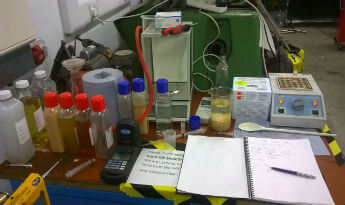
Laboratory Service
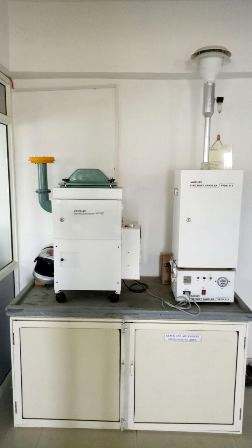
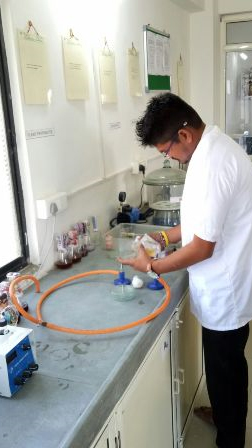
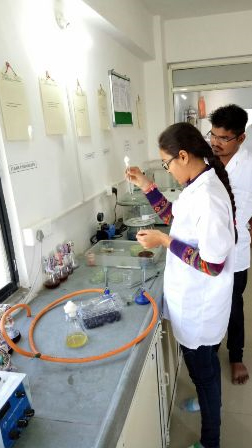
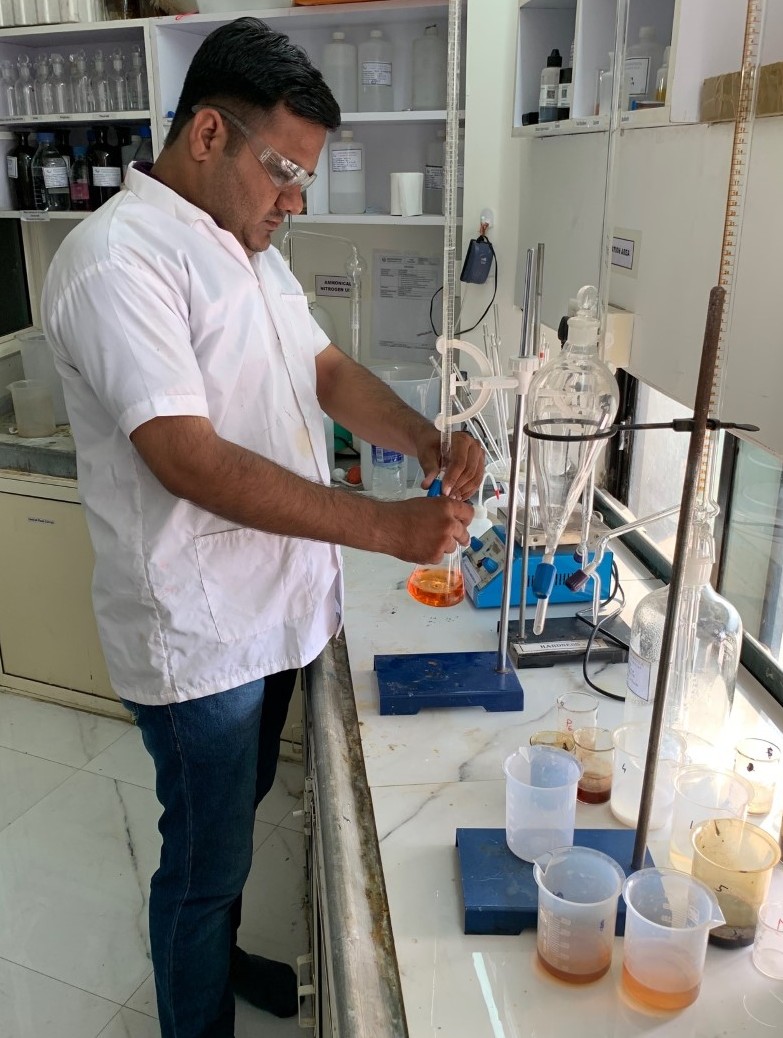
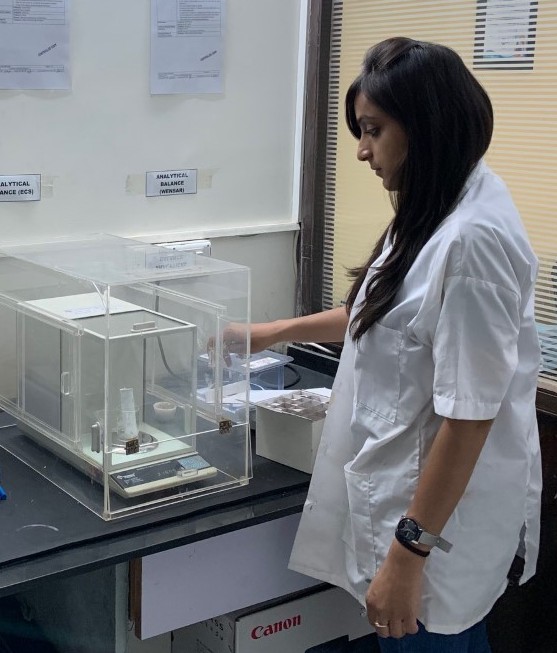
We Perform :
- Analysis of water/ Waste Water
- Analysis of Solid/Hazardous Waste
- Analysis of various Air Pollutants
- Ambient Air Quality Monitoring
- Treatability Study
- Flue Gas and Process Gas Stack Monitoring and Analysis
- Soil Analysis
- Noise Monitoring
Field Monitoring Service
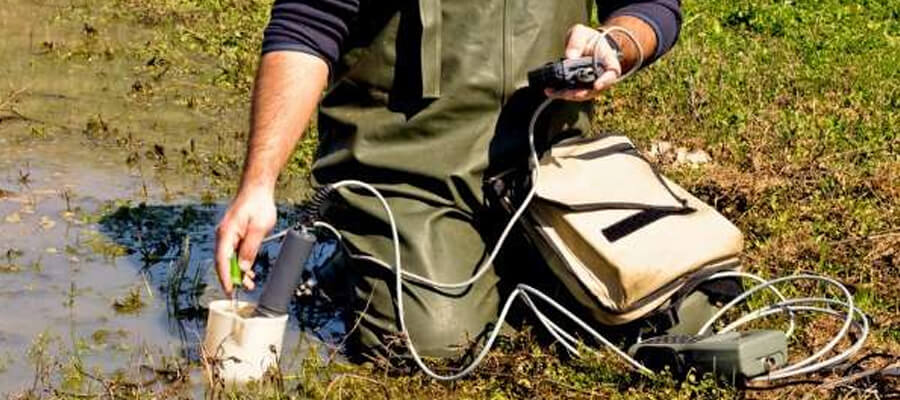
- Ambient Air Quality Monitoring - We carry out the Ambient Air Quality Monitoring with a purpose of compliance of Air Quality Standards to evaluate the impacts of Existing Air Pollution sources.
- Stack Monitoring - It refers to the monitoring of pollutant emissions from Industry stacks. The purpose of stack monitoring is to extract sample from the stack or duct which is representative of emissions from that stack or duct during a time period under a desired operation condition.
- There are two types of Stack Monitoring :
- Flue Gas Stack - A flue-gas stack is a type of chimney, a vertical pipe, channel or similar structure through which combustion product gases called flue gases are exhausted to the outside air.
- Process Gas Stack -It is a type of chimney through which gases arising out of various chemical reactions inside the Industrial plant are exhausted.
- Work Place Monitoring - Personal samplers or Handy samplers of adequate and appropriate design are available with us which have adequate capacity to carryout Industrial Hygiene surveys and exposure to fugitive emissions.
- Lux Monitoring - It refers to the continuous light measurement in the production areas.
- Meteorological Monitoring - We have several on-line data-loggers for weather data collection as well as manual weather data collection equipment. These equipment include Wind Vane, Wind Anemometer, Dry & Wet Thermometer, Max. & Min. Thermometer, Rain gauge, Barometer and SODAR.
- Waste Water Sampling - We collect the samples by two Methods:
- Grab Sampling - Collection of the sample at a particular time and place can represent only the composition of the source at that time and place. This involves manual sampling and minimal equipment.
- Composite Sampling - It refers to physically mixing of individual samples to form a composite sample.
- Water Sampling - Water sampling and analysis involves the collection of water samples and measurements for chemical, biological characteristics to determine its quality.
- Soil Sampling - Core cutters are used to collect surface soil samples. Before stated sampling the upper most soil layer is removed to prevent mix garbage or dust. Then original or clear soil is collected in core cutter up to the depth of about 1 to 2 feet.
Rain Water Harvesting
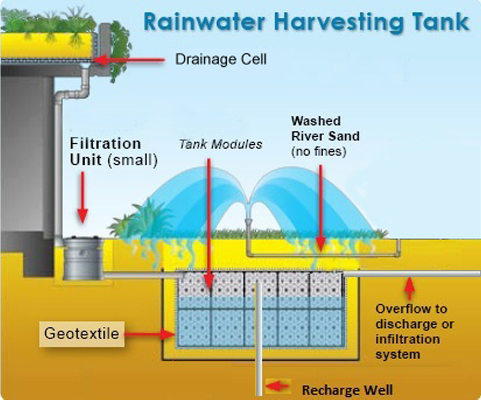
- Water Harvesting has emerged as a sensible method of meeting the water shortfall in a cost effective manner and is now being applied in most of the cities to raise the groundwater levels.
- Rain Water Harvesting is one of the technique of collection and storage of rainwater into natural reservoirs or tanks, or the infiltration of surface water into subsurface aquifers (before it is lost as surface runoff).
CGWA Permission
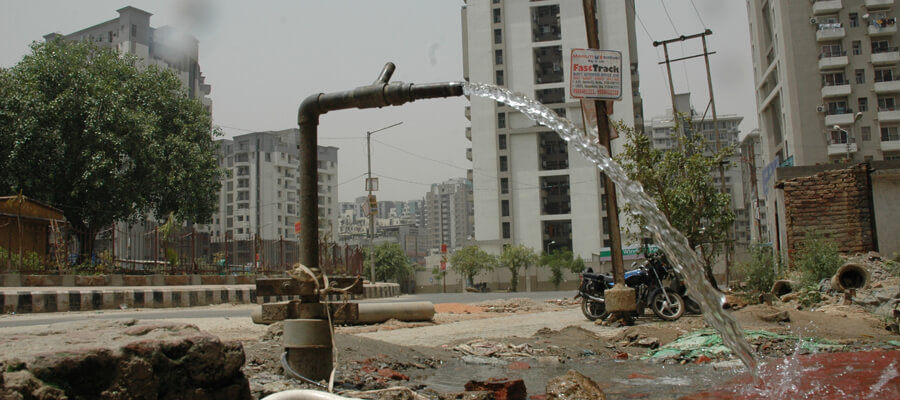
- All industries that draw groundwater for their operations will now have to take a no-objection certificate (NOC) from the Central Ground Water Authority (CGWA) to extract groundwater.
Industrial Land Scaping

- A factory should not become a place of only machinery, dust, pollution, and noise, but should also be provided with nicely laid out parks and gardens which indirectly suppress some amount of pollution also.
It is mentioned in the Plastic Waste Management (PWM) Rules 2016, as amended in 2018, that Producers, Importers and Brand-Owners (PIBOs) need to prepare an Action Plan which must include the quantum of take-back of plastic waste introduced by them into the market. We are also providing services wherein we prepare an Action Plan based on Extended Producers’ Responsibility (EPR) of our client and have it approved by the concerned Urban Development cell (Swachh Bharat Mission (SBM), etc.) and thereafter, the concerned State Pollution Control Board (SPCB) or concerned bodies. The Plastic Waste Registration will be granted to our client by the concerned SPCB based on the approved Action Plan prepared by us.